Use cases. What seib-1 does with engineering work, shown on real runs.
4 use cases shown
 01Vision
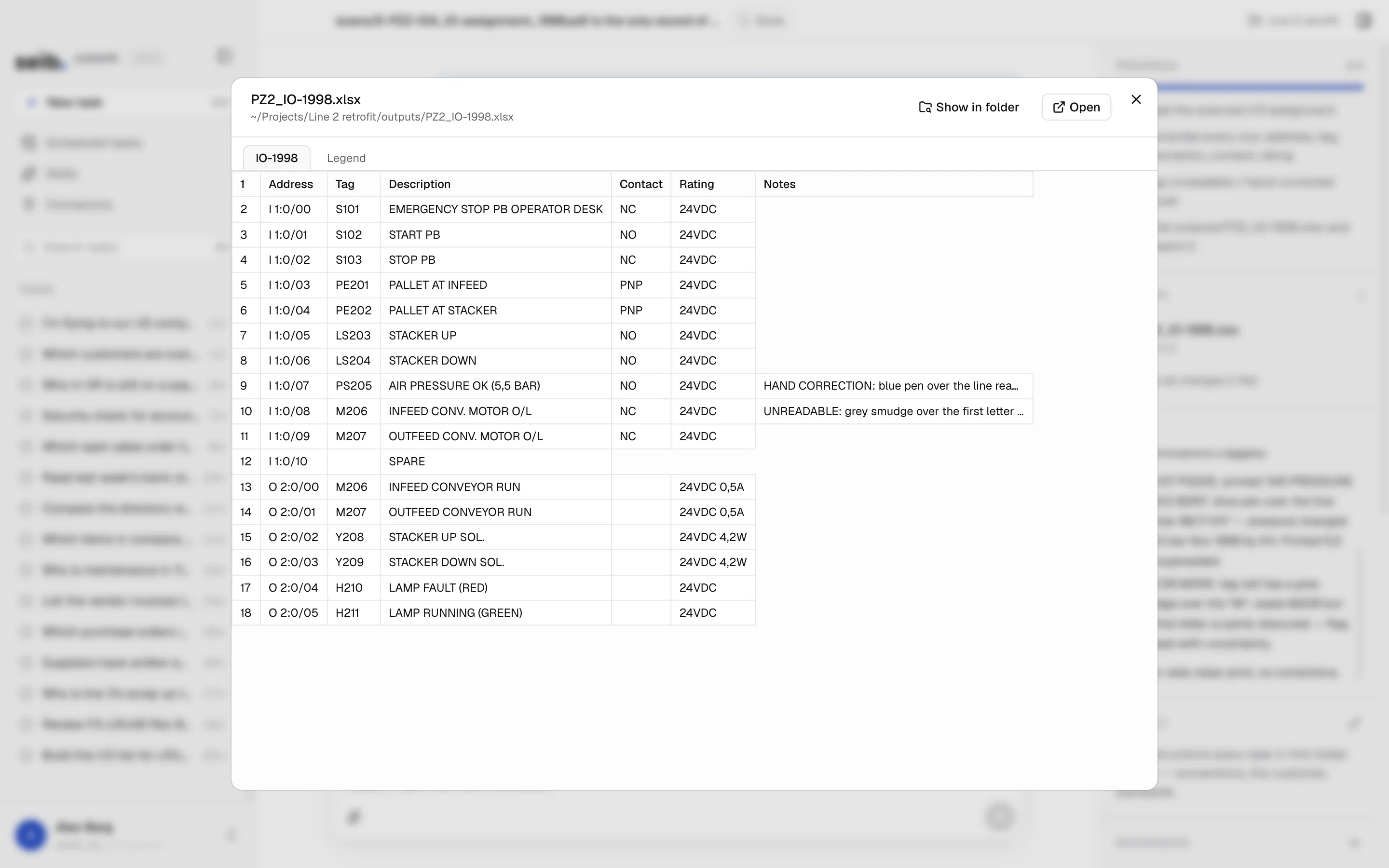
Read a 1998 scan into a spreadsheet
A photocopied I/O sheet, read by sight into Excel, with the smudged tag and the handwritten correction flagged rather than guessed.
Retrofit engineer · Scanned PDF, image only
 02Engineering formats
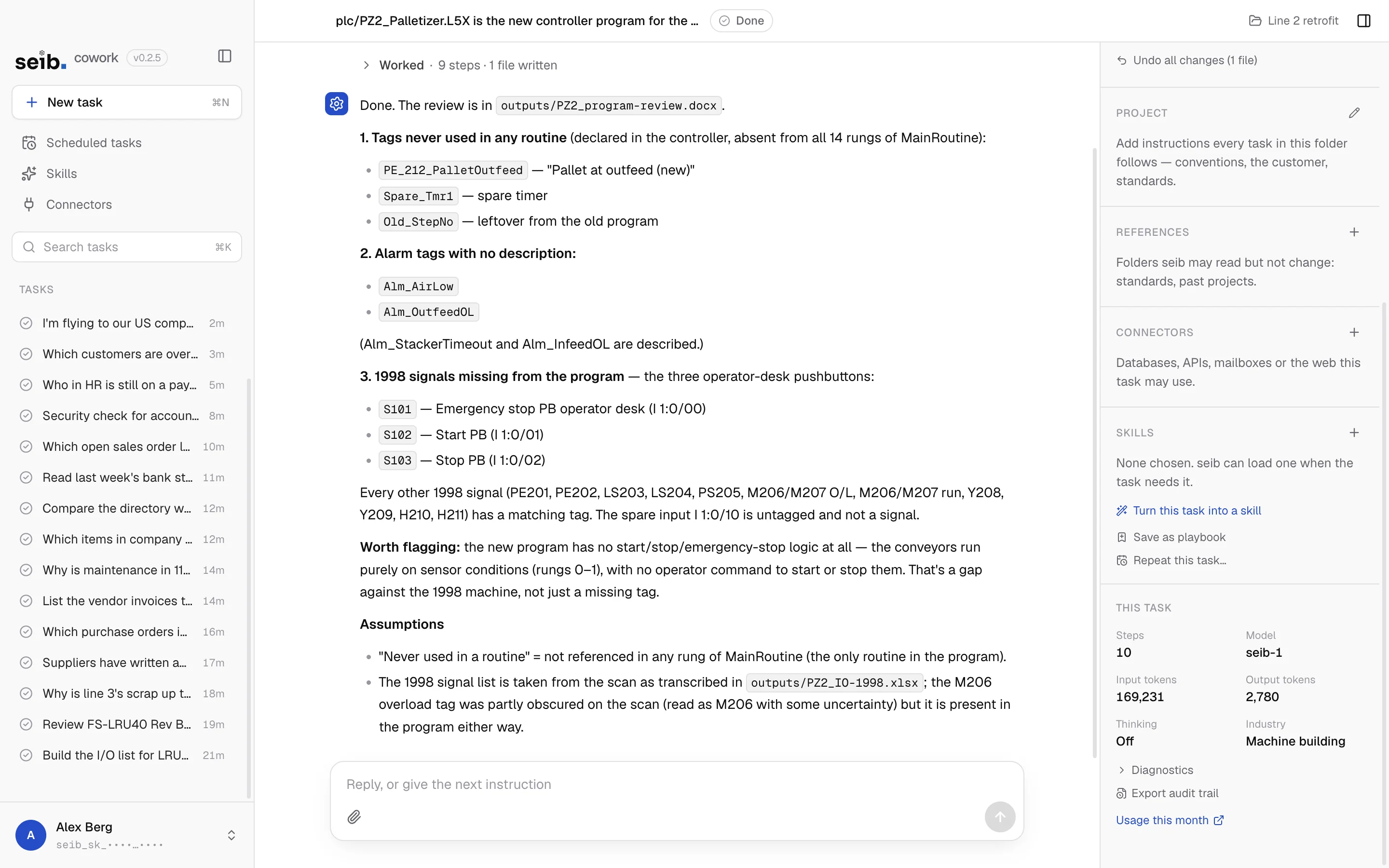
Audit a PLC program export
A Rockwell L5X export checked for unused tags and undocumented alarms, and against the old machine's I/O: including logic that isn't there.
Controls engineer · Rockwell L5X export, The 1998 I/O transcription
 03Code
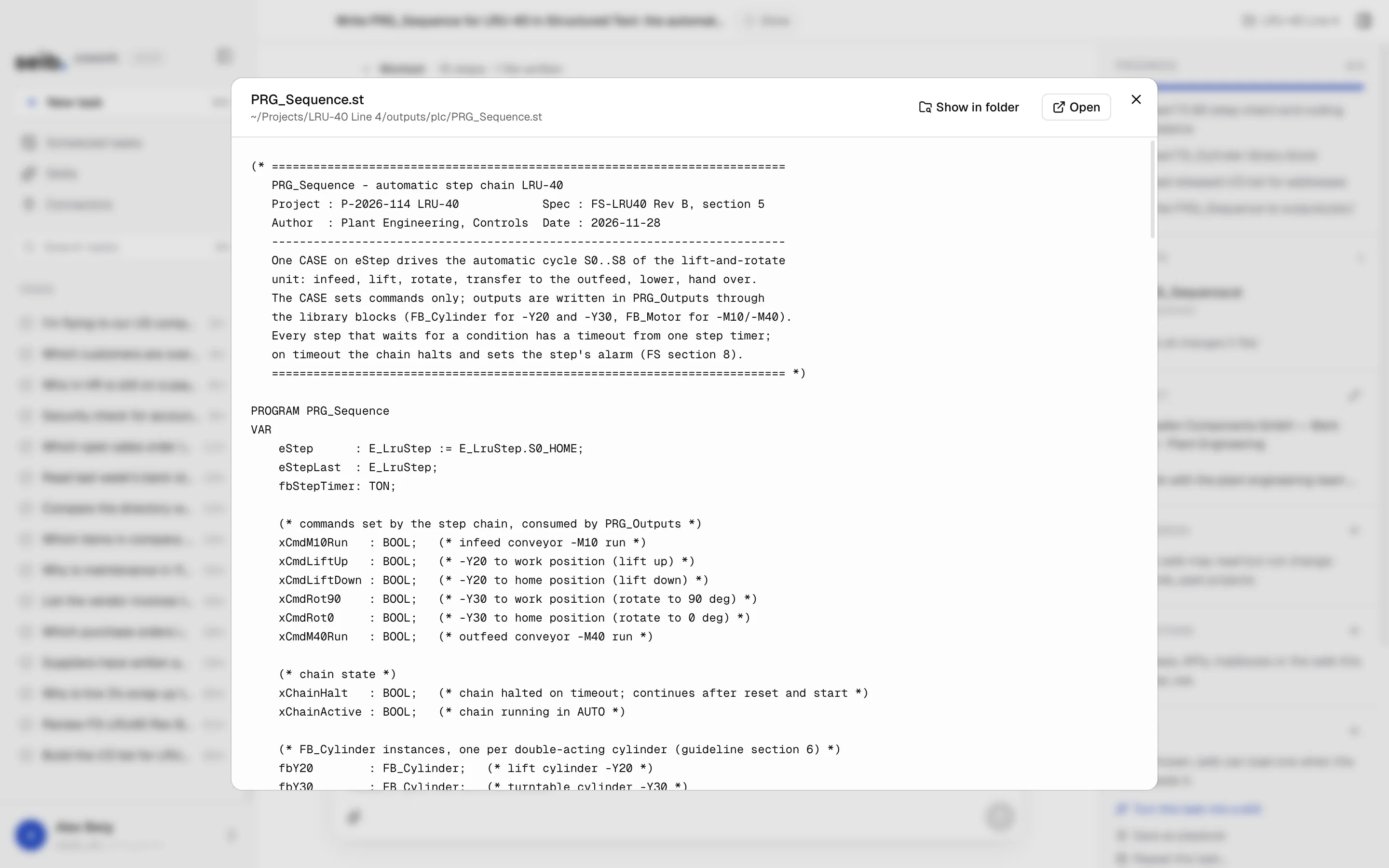
Write a step chain in Structured Text
The automatic sequence of a specification written as IEC 61131-3 Structured Text, to the house coding guideline, using the house library unchanged.
PLC programmer · Functional specification (PDF), PLC coding guideline, House library block FB_Cylinder, Released I/O list
 04Live plant data
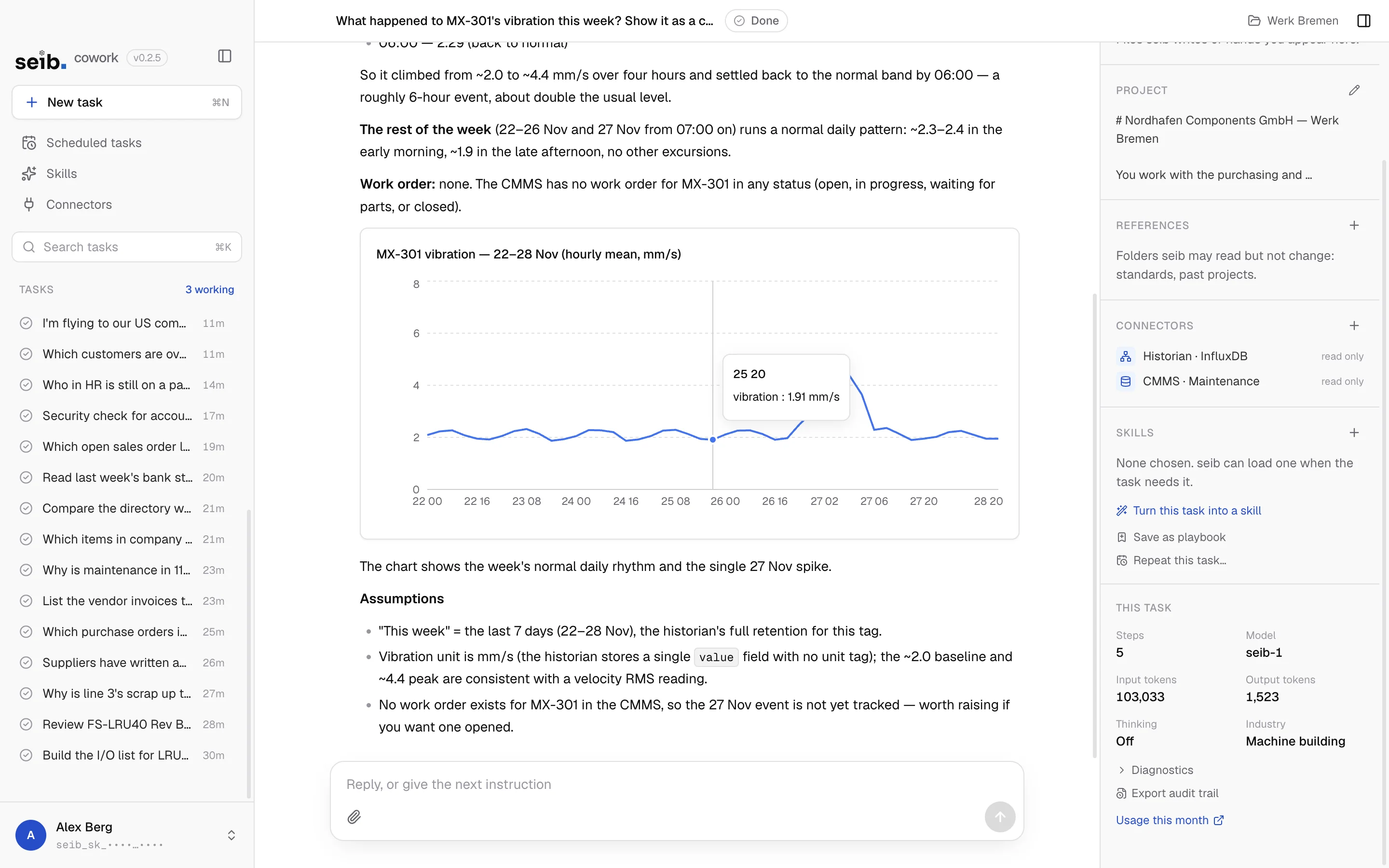
Explain a trend from the historian
A week of vibration data from the historian, charted and explained, and checked against the maintenance system for a work order.
Maintenance engineer · Historian (InfluxDB), CMMS (MySQL)
Every screen is a capture of seib Cowork 0.2.5 running the request shown on seib-1, the real model, with no step scripted. The systems and documents are seib’s test environment: two fictional companies, Nordhafen Components (a machine-building plant) and the Brennholt Group (a six-company group), with generated data. Where a folder carries project instructions, such as the names of a database’s tables, the run used them, as a customer’s would. Names, keys and file paths of the machine that ran it are masked; nothing else on a screen is changed. No customer data appears.
Request pilot access.
Not a waitlist. Tell us the problem and we’ll tell you honestly whether seib is ready for it.
- 1A person reads your request and replies within a few business days.
- 2A short call about the line, the toolchain and what's slow today.
- 3A Cowork pilot starts with one team, read-only connectors and two or three knowledge bases.